
Bone
Warm off-white with a soft grey break. The safest way into a mineral finish.
- Layers
- 2–3
- Character
- Soft, chalky, close to even
- Best in
- South light, living rooms
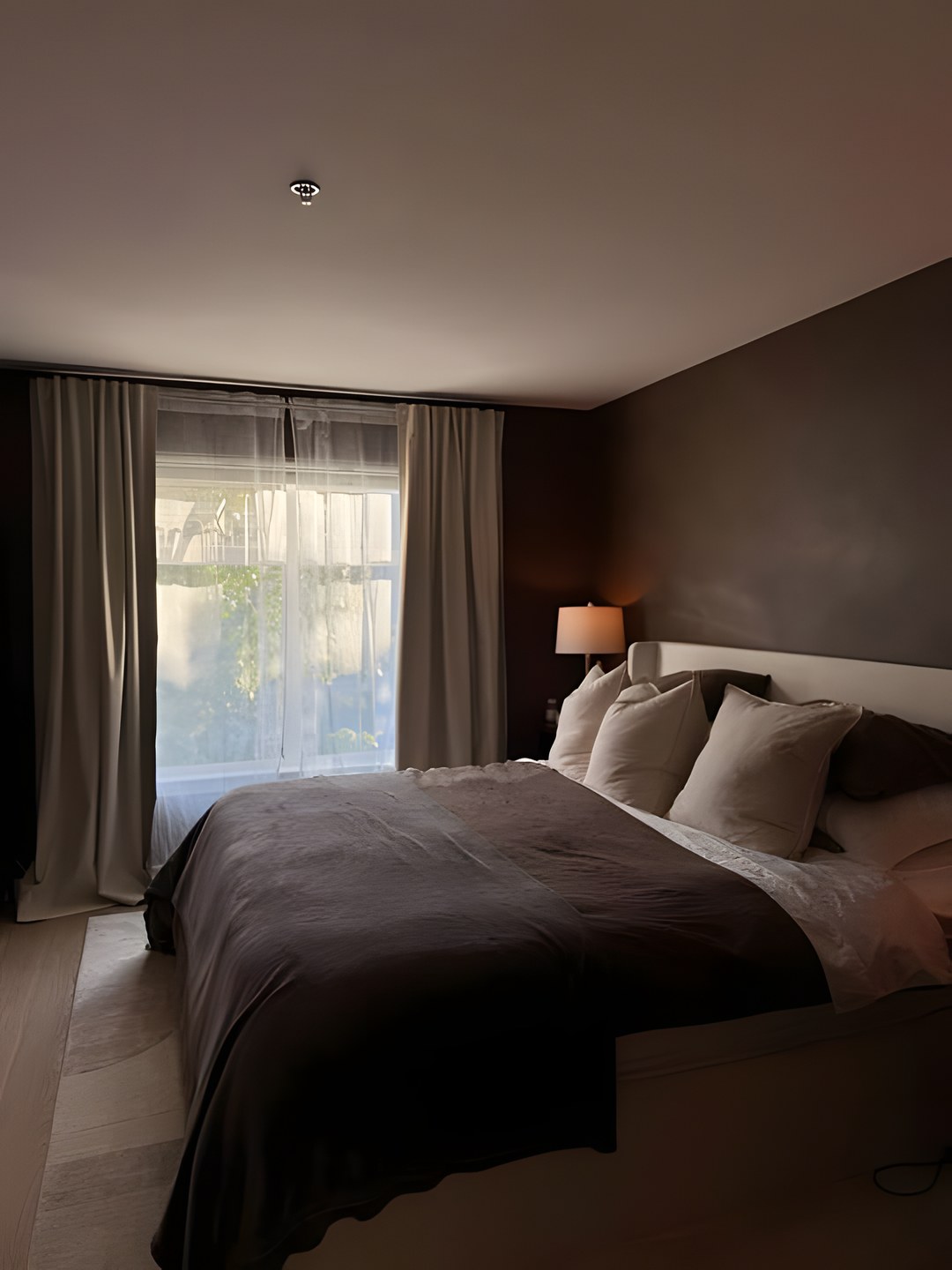
Slaked lime and mineral pigment, brushed on thin and wet, pass over pass. Cloudy movement you can't get out of a tin.
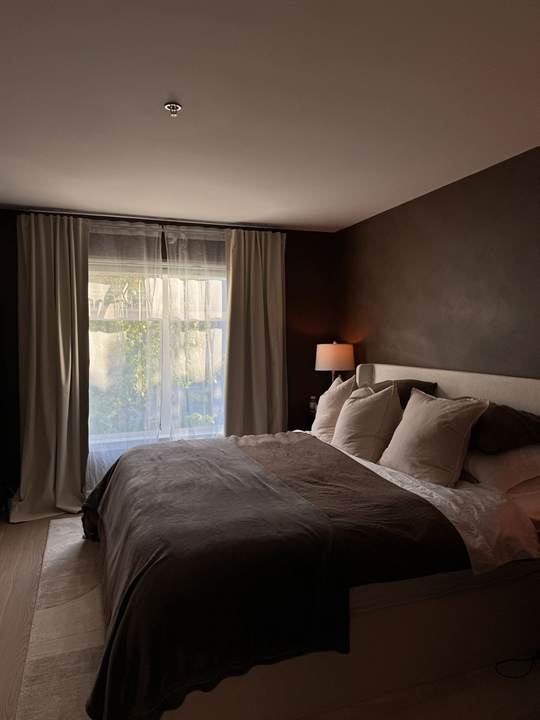
What each one is, how it goes on, and which rooms it actually suits: the part most people only find out after they have paid for it.
Warm off-white with a soft grey break. The safest way into a mineral finish.
Muted green that reads grey at noon and green at dusk. The one people photograph.
Deep and moody. Swallows light rather than reflecting it, which is the point.
The same look, made with ordinary paint rather than limewash paint. Cheaper, tougher, and it will take a wet room. It just isn't a mineral surface.
Rendered swatches in his library colours, not photographs. Close-ups of Kyle's own boards replace them once they are made.
Limewash goes on in coats like anything else, a minimum of two to three, but it doesn't build a film the way paint does. Each coat soaks into the one beneath it, and what comes out is cloud-like movement across the whole wall rather than one flat, even tone. Over bare masonry or a lime or cement plaster it needs no primer. Over drywall, which is nearly every room in Victoria, it gets a coat of the limewash primer first, and that step is where limewash jobs are won or lost.
The system is chosen per job. My primary supplier is 5 Star Finishes in Vancouver: microfiltered hydrated lime and powdered marble, blended to order rather than tinted out of a tin. It matters for two reasons. It is a day up the road instead of a container from Italy, so a colour that goes wrong is a week, not a season. And their limewash can be matched to any Benjamin Moore or Sherwin-Williams colour, so the three finishes above are examples of what it does, not the list you have to choose from. If you have already picked a Benjamin Moore colour for the rest of the house, the limewash can be that colour.
Water is the thing to be careful with, and the answer is the sealer rather than the room. The limewash I use is made for interior and exterior surfaces, and it can be finished with a penetrating sealer, with soap, with wax, or left bare so that more coats can go on later. Left bare somewhere that gets splashed it will mark. Sealed, it takes a great deal more. It is still a mineral surface rather than a wipeable one, so I will tell you which walls want a sealer and which are better left open, and hand you the data sheet either way.
Yes, with the correct limewash primer. Applied straight over conventional paint it can bond poorly or fail, so the primer is an important part of the system.
Properly applied and cured, it should not rub off in high-contact areas. Depending on the system, it may want the appropriate sealer or wax.
Faux limewash is a similar look created with conventional paint rather than limewash. It is more washable and better suited to high-moisture rooms when the correct paint system is used, but it is a painted effect, not a mineral finish.
More than standard painting, because of the additional preparation, the specialty materials and the multiple hand-applied coats. A feature wall can be a sensible way to introduce the finish without doing the whole room.
Do not touch it until it has dried and cured. A hand on a wet lime wall will mark it, and that area has to be reworked. Once it has cured it is fine to live with.
Questions about limewash, plaster, or how a job runs? Ask away — or Kyle's on 250-896-3048.
Ask me anything about the work — the finishes, the prep, how a job runs. I can pass your details to Kyle too, and he will get back to you himself.
Kyle prices every job after walking it, so I cannot quote here — but the walkthrough is free.